Living Library Press Circle (LLPC)
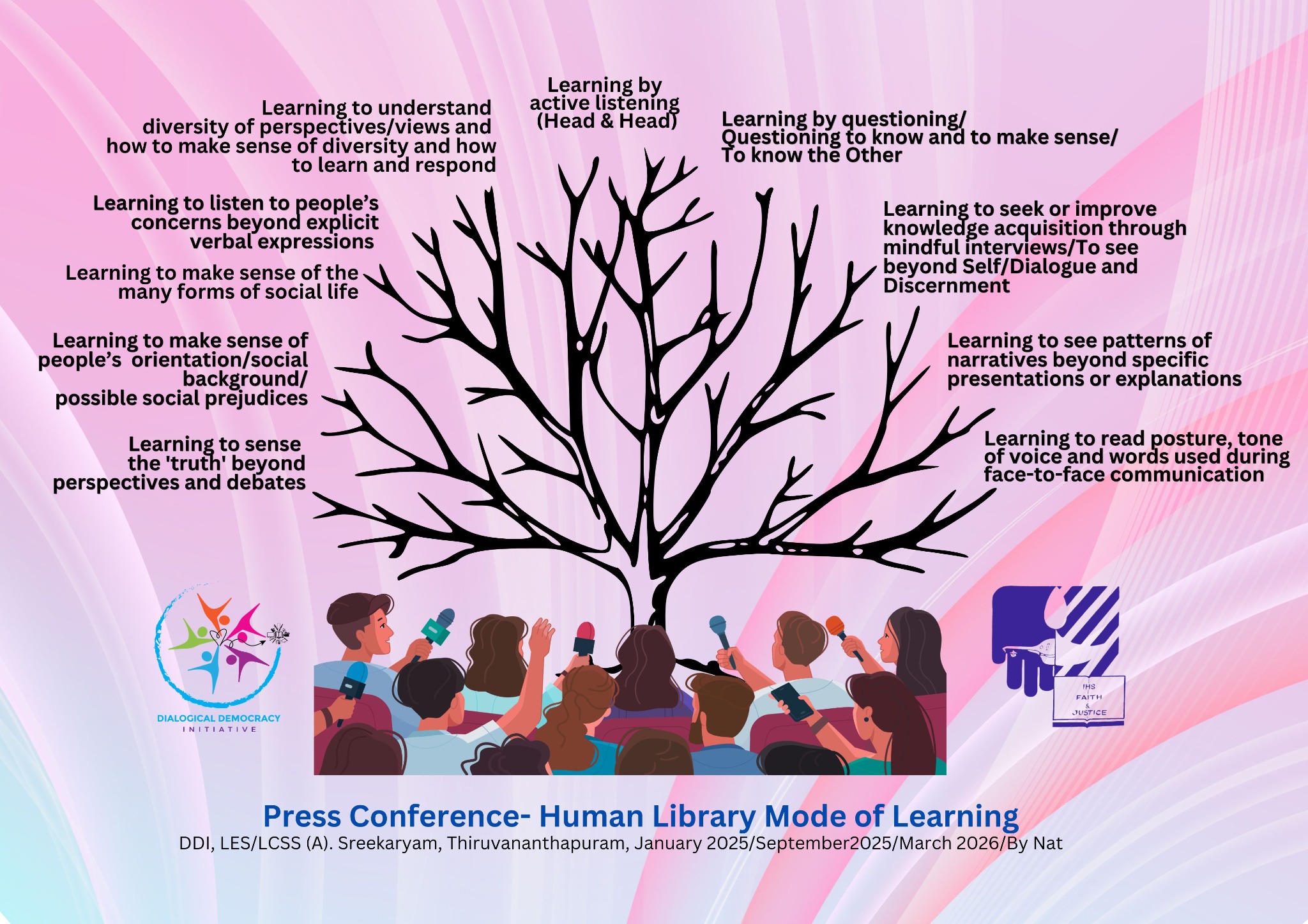
The press-conference-style learning, combined with the human library concept and practice, offers a practical and heartfelt way to move away from the traditional, top-down classroom approach. Instead of simply listening to a single authority, students step into the role of journalists at a press conference, preparing an initial set of questions and engaging directly with real people—workers, farmers, survivors, and activists—each treated as a "human book" sharing their stories, struggles, and valuable insights. (The spirit of journalism is so important for all serious students to ‘absorb’ – curiosity, concern, seeking truth courageously but cautiously, questioning people, including authorities, informing or alerting the community.) Every such encounter, structured like a press briefing yet rooted in the human library's spirit of trust, brings novelty and innovation, since no two testimonies or lines of questioning ever unfold in the same way. This isn't a huge change but a simple shift: all it takes is inviting "books" as guests (carefully selected to the concerns or realities explored), preparing initial questions as a press corps would, and having a facilitator—acting much like a press conference moderator—create a safe, welcoming space. Questions grow spontaneously as the press conference proceeds, in true human library fashion, where the 'reading' of a person's story deepens through follow-up and genuine curiosity rather than a ‘fixed script’. It's easy to fit into an existing class or workshop, needing no elaborate infrastructure beyond willing speakers and curious questioners.
Students become active participants, practising attentive listening; picking up on what's left unsaid, or the silences; and exploring truths beyond rehearsed answers, much as human library "readers" learn to sense the person behind the story. This approach fosters multiple ways of understanding—analytical, emotional, social, and spiritual—as young people connect personal narratives shared at the press table to broader issues of caste, class, ecology, and power. The press conference format encourages accountability and discipline through structured questioning, while the human library approach emphasises dignity, vulnerability, and mutual respect, ensuring the exchange remains safe, honest, and meaningful for both the “book” and the questioner. It also allows students to explore their emotions.
Together, these two notions transform a regular classroom into a vibrant little public learning space—part newsroom, part living library—where knowledge is uncovered through questions or dialogue, not just lectures, and where democratic participation is practised from the very start. It's essential because it challenges rote, hierarchical teaching and manageable because it only requires willing "human books", curious students who present themselves as ‘young journalists’, and a facilitator dedicated to dialogue rather than merely delivering lectures.