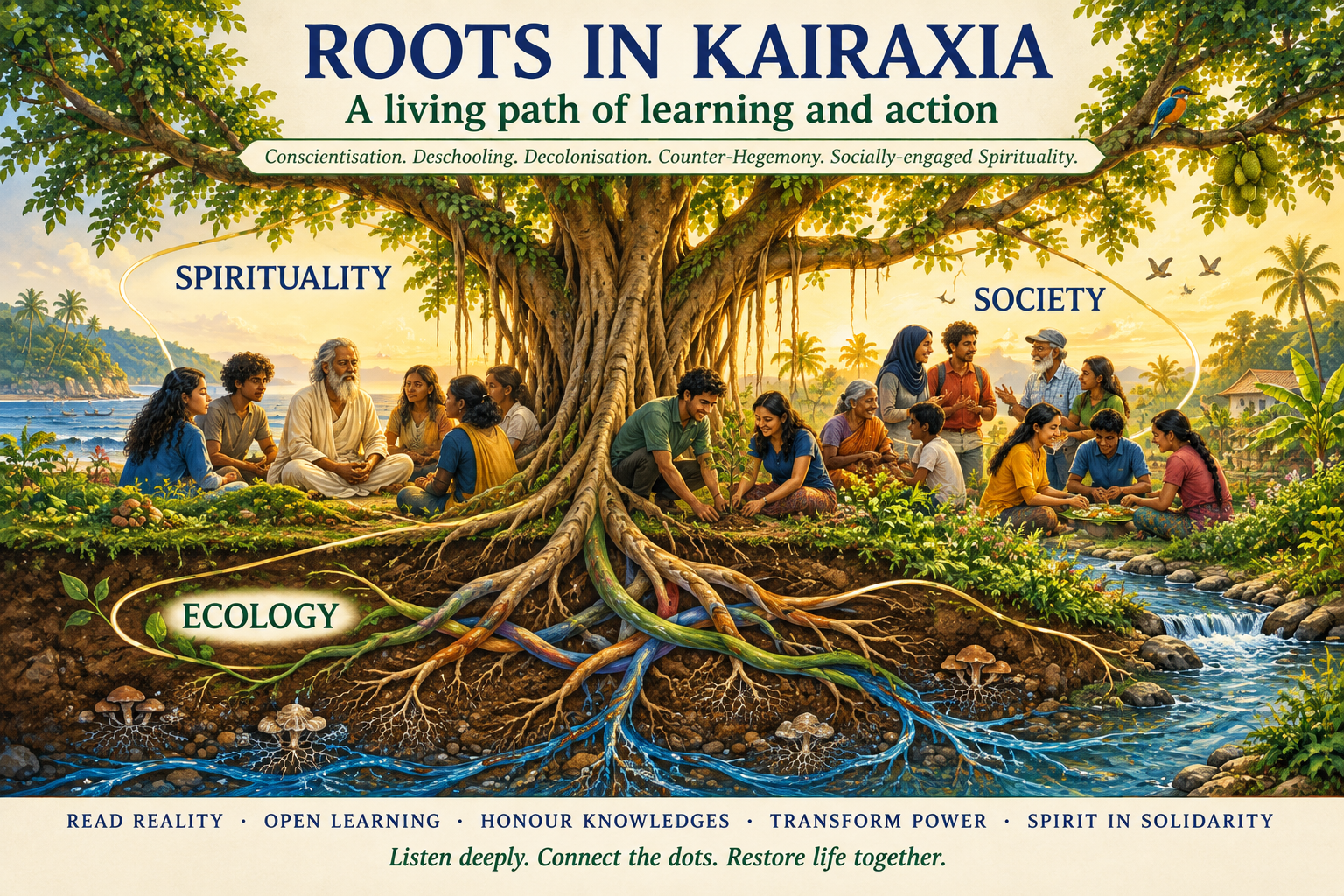
Kairaxis: An Epistemic-Praxis Orientation
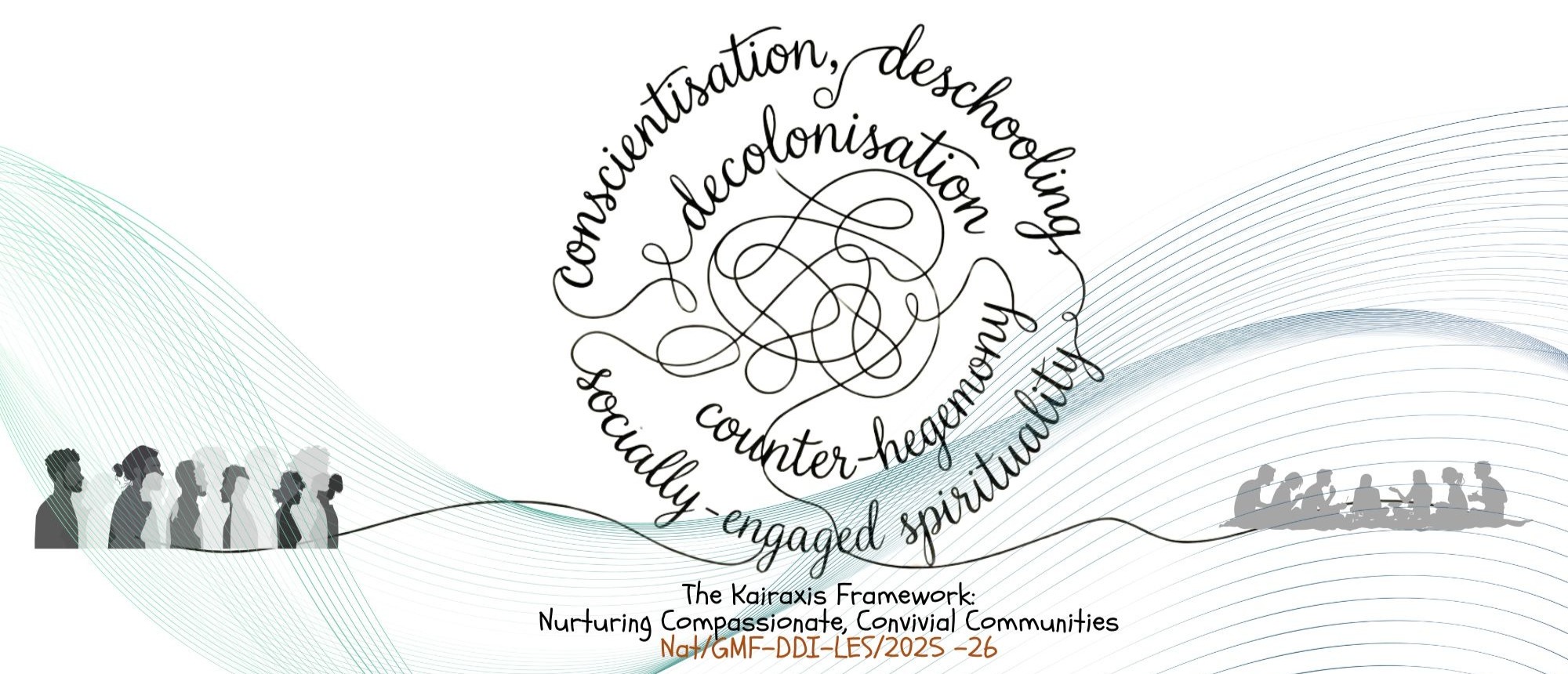
The weaving of conscientisation, deschooling, decolonisation, counter-hegemony and socially-engaged spirituality shapes an epistemic-praxis orientation for student-scholars, organic-public intellectuals, community organisers or educators genuinely interested in creating a 'metaxological space' (William Desmond, Desire, Dialectic, and Otherness: An Essay on Origins) between Self and Other (humans, non-humans, and nature).
The Power of the Weaved Learning Journey
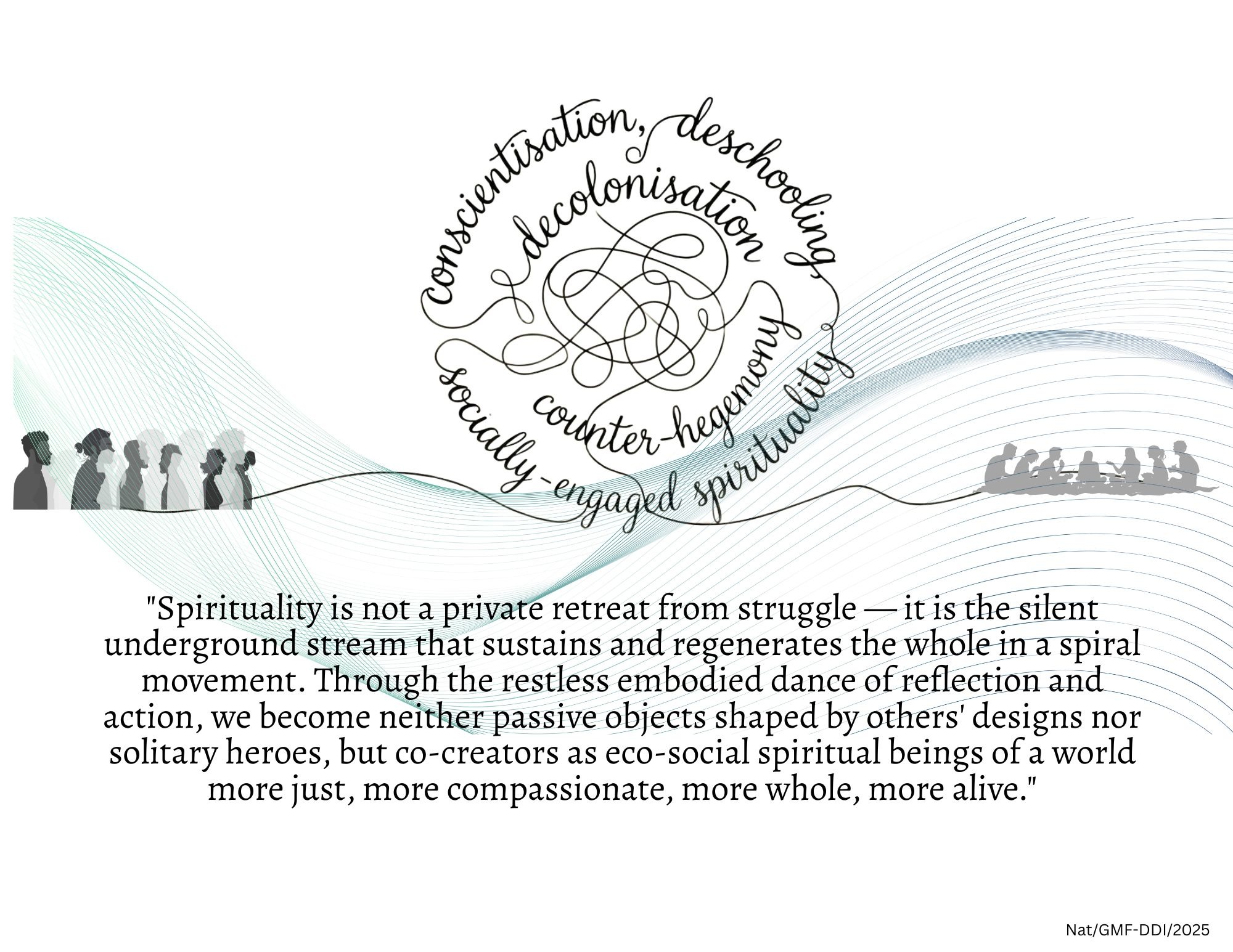
One Pathway of the Learning Journey Offered by the 'Weaved Framework'. The weaving reveals its real power. None of these five 'threads' works in isolation; each depends on the others to reach its fullest expression, and the pattern below traces one possible pathway through the fabric they form together: Conscientisation flows into deschooling: once you become aware of an injustice, you naturally begin questioning the very education system that helped conceal it from you in the first place. Deschooling flows into decolonisation: unlearning inherited, harmful systems opens space to honour Indigenous and community ways of knowing that had been dismissed or buried. Decolonisation flows into counter-hegemony: reclaiming suppressed knowledge directly unsettles the assumption that only dominant, Western frameworks count as valid or rigorous. Counter-hegemony flows into socially-engaged spirituality: resistance rooted in compassion, rather than anger alone, tends to be more sustainable, ethical, and genuinely eco-human-centred. And socially-engaged spirituality flows back into conscientisation, closing the circle: deep empathy and moral grounding fuel the kind of awareness that leads to real, lasting action, rather than reaction that burns out.'
The learning journey pathway is not a straight line but a spiral, since each return to conscientisation happens at a deeper level than the one before, carrying with it everything gathered from deschooling, decolonisation, counter-hegemony, and spirituality along the way